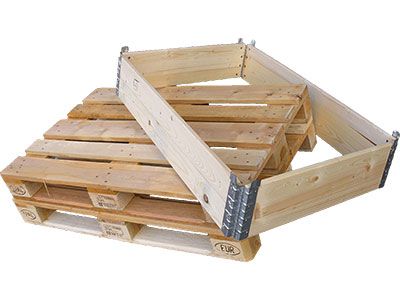
📦 Components of a Euro Pallet
A Euro Pallet (EUR Pallet) measures 1200mm × 800mm × 144mm. For businesses trading goods in Europe, following these Euro Pallet standard dimensions is critical to avoid overloading or underloading shipments.
📐 Euro Pallet Dimensions
| EUR Pallet Type |
Dimensions (cm) |
Dimensions (inches) |
ISO Pallet Alternative |
| EUR, EUR 1 |
80 × 120 |
31.50 × 47.24 |
ISO1 – same size as EUR |
| EUR 2 |
120 × 100 |
47.24 × 39.7 |
ISO2 |
| EUR 3 |
120 × 100 |
39.37 × 47.24 |
ISO2 (variation) |
| EUR 6 |
80 × 60 |
31.50 × 23.62 |
ISO0 |
✅ These standardized pallet sizes ensure bulk freight compatibility in Europe.
🪵 Materials Used for Euro Pallets
Euro pallets are made from different materials, though wood remains the most common.
Approved Materials:
-
Coniferous woods: fir, pine, spruce
-
Softwood: birch
-
Hardwood: ash, acacia, oak, maple, sycamore, European chestnut
Wood pallets are popular because they are cost-effective, strong, and recyclable. They can also be repaired and reused in logistics supply chains.
Advantages of wood pallets:
Disadvantages of wood pallets:
♻️ Plastic Euro Pallets
Plastic pallets are the second most common. They are:
However, they are more expensive compared to wooden Euro pallets, which remain the industry standard.
✅ Euro Pallet Regulations
All Euro pallets must meet strict quality regulations and are inspected by independent organizations. Before being certified, pallets must pass specific industry criteria for durability, dimensions, and load-bearing strength.